Table of Contents
- Introduction
- What is Hastelloy C276 Wire?
- Hastelloy C276 Wire Specifications & Equivalent Grades
- Applications of Hastelloy C276 Wire
- Why C276 Wire is Selected for Corrosive Service
- Buyer Checklist & Common Ordering Mistakes
- Relevant Standards & Grade References
- Supply & Export of Hastelloy C276 Wire from India
- Frequently Asked Questions (FAQs)
Introduction
If you are searching for a Hastelloy C276 Wire Exporter in India, the useful question is not only “who can supply it?” The more important question is whether the wire being quoted matches the actual application, diameter, condition, surface finish, form and documentation your project needs.
Hastelloy C276, commonly identified as UNS N10276 and W.Nr. 2.4819, is a nickel-chromium-molybdenum alloy with tungsten. It is known for strong resistance to pitting, crevice corrosion and stress-corrosion cracking in many aggressive chemical environments. That is why C276 wire can be considered for chemical processing, pollution-control equipment, waste treatment, marine service and specialized fabrication.
This guide from Sankalp Alloys focuses on the details buyers actually need before sending an RFQ: grade identification, common applications, relevant standards, purchasing checks, export documentation and mistakes that can delay an order.
What is Hastelloy C276 Wire?
Short answer: Hastelloy C276 wire is a corrosion-resistant nickel-chromium-molybdenum-tungsten alloy wire based on UNS N10276 chemistry. It is chosen where ordinary stainless steels may not provide sufficient resistance to aggressive process media.
C276 combines chromium and molybdenum with nickel as the principal base, while tungsten contributes to its corrosion-resistant alloy system. The alloy is used in severe environments involving chlorides and a range of oxidizing and non-oxidizing media, subject to the actual process conditions.
Wire may be required for general fabrication, formed components, mesh, springs, fastener-related applications or welding consumables. The end use matters because a buyer asking for “C276 wire” may still need to define diameter tolerance, temper, finish, coil form and the exact standard required.
Hastelloy C276 Wire Specifications & Equivalent Grades
Quick answer: Hastelloy C276 wire is commonly identified as UNS N10276 and W.Nr. 2.4819. For purchasing, buyers should confirm the requested diameter, size range, coil weight, condition, finish and applicable product or welding specification before placing the order.
Hastelloy C276 Wires Specification
| ASTM | ASTM B574 / ASME SB574* |
|---|---|
| Dimensions | ANSI/AWCI-01-1992, ASTM E2016-11 and RRW 360 (where specified by the buyer/project) |
| Size | 1 mm - 14 mm |
| Diameter (mm) | 0.60 - 6.00 |
| Coil Weight (kg) | 80 - 300 kg max, subject to order and packing requirement |
*ASTM B574 / ASME SB574 is commonly referenced for nickel-alloy rod and bar. If the requirement is specifically wire or welding wire, the applicable standard should be confirmed against the actual product form and end use.
Equivalent Grades of Hastelloy C276 Wires
| Standard | UNS | WNR. | AFNOR | EN | JIS | OR | GOST |
|---|---|---|---|---|---|---|---|
| Hastelloy C276 | N10276 | 2.4819 | - | NiMo16Cr15W | NW 0276 | ЭП760 | ХН65МВУ |
Hastelloy C276 Wire
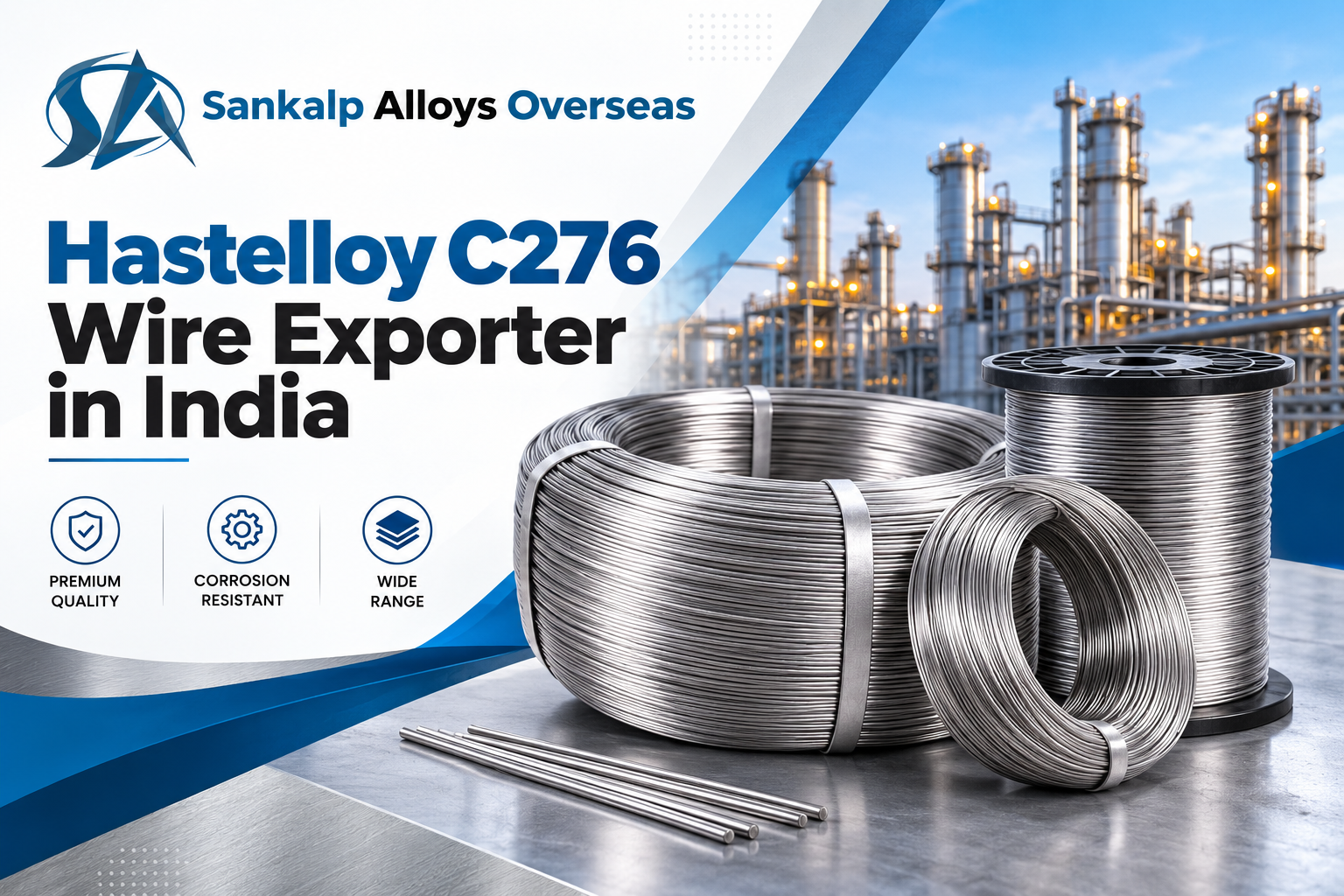
Sankalp Alloys supplies and exports Hastelloy C276 wire for domestic and international requirements where buyers need a corrosion-resistant nickel alloy in wire form. C276 is a nickel-chromium-molybdenum-tungsten alloy, and enquiries are commonly raised by grade designations such as Hastelloy C276, UNS N10276 and W.Nr. 2.4819.
Depending on the end use, buyers may require coil wire, straightened wire, cold-drawn wire, hot-rolled wire, welding wire or wire for further fabrication. The practical purchasing details are not only the grade name; diameter, tolerance, condition, surface finish, coil/spool form, quantity and applicable specification should also be stated clearly.
Hastelloy C276 wire may be considered for chemical processing, offshore and marine service, pollution-control equipment, gas handling, power-generation systems, petrochemical equipment, pharmaceutical process equipment, condensers, heat exchangers, seawater-related equipment, pulp and paper machinery and other engineered components exposed to aggressive process conditions.
It can also be used for fabricated parts such as mesh, screens, formed wire components, fastener-related items and selected welding or repair applications when the correct wire condition and specification are chosen. For welding consumables, buyers should specify the relevant welding classification instead of relying only on the alloy name.
Related search terms: Hastelloy C276 Coil Wire, Hastelloy C276 Wire Exporter, Hastelloy C276 Hot Rolled Wire, Hastelloy C276 Cold Rolled Wire, Hastelloy C276 Wire Supplier in India, Hastelloy C276 Wire Stockist, UNS N10276 Wire, Alloy 2.4819 Wire and Nickel Alloy C276 Wire.
Applications of Hastelloy C276 Wire
Where is Hastelloy C276 wire used? It is selected for fabricated and process components where corrosion resistance is important, including chemical processing, offshore oil extraction, gas handling, food and pharmaceutical process equipment, power plants, petrochemical systems, seawater equipment, condensers, heat exchangers, pulp and paper equipment and other special engineered applications.
Chemical Processing
C276 wire can be used for fabricated parts and wire-based components intended for equipment exposed to aggressive chemical environments. The exact suitability should always be checked against temperature, concentration and process media.
Pollution Control & Waste Treatment
The alloy is used in industries handling corrosive gases, chlorides and waste streams, making C276 a relevant material option for selected wire components in pollution-control and waste-treatment equipment.
Pulp, Paper & Process Equipment
Hastelloy C276 is used in corrosive process industries where resistance to localized corrosion is important. Wire may be selected for mesh, formed parts or other engineered components depending on the design.
Marine & Chloride-Containing Environments
Because Alloy C276 offers resistance to pitting, crevice attack and chloride-related stress-corrosion cracking, it can be considered for selected components exposed to chloride-bearing service.
Welding & Fabrication
C276 chemistry is also used in welding consumables. Where the requirement is specifically welding wire, buyers should state the required welding classification, such as ERNiCrMo-4 where applicable, instead of purchasing only by the generic alloy name.
Why C276 Wire is Selected for Corrosive Service
Quick answer: C276 is selected because its nickel-chromium-molybdenum-tungsten composition provides broad corrosion resistance, including resistance to pitting, crevice corrosion and stress-corrosion cracking in many demanding environments.
This does not mean one grade is automatically suitable for every corrosive process. Actual performance depends on the chemical media, concentration, temperature, contaminants, fabrication method and service conditions. For critical equipment, material selection should be checked against the project specification or corrosion data for the real operating environment.
From a purchasing point of view, C276 also makes sense when the cost of premature corrosion, maintenance or replacement is higher than the value of selecting a more corrosion-resistant alloy at the start.
Buyer Checklist & Common Ordering Mistakes
Start with the application, not only the alloy name.
A mesh requirement, spring requirement, fabrication wire and welding wire can all need different purchasing details even when the base alloy is C276.
Confirm diameter and tolerance clearly.
Writing only “C276 wire required” usually creates unnecessary back-and-forth. State the nominal diameter, tolerance if critical, quantity and supply form.
Do not mix general wire and welding wire specifications.
If the wire will be used as a welding consumable, include the required welding classification and process. For other wire uses, specify the material/product standard appropriate to the requirement.
Agree documentation before placing the order.
If your project needs specific test documentation, inspection, traceability, packing marks or export paperwork, put it in the enquiry rather than adding it after production or dispatch planning.
Sankalp Alloys technical team note: “For C276 wire, define the end use first. Diameter is important, but condition, finish, coil form and the applicable standard are what make the material practical for the actual job.”
Relevant Standards & Grade References
The correct standard depends on the product form and application. Common references associated with Alloy C276 include:
- UNS N10276 — grade designation for Alloy C276
- W.Nr. 2.4819 — European material designation commonly associated with C276
- ASTM B574 / ASME SB574 — C276 rod and bar products; confirm applicability to the ordered wire form and size
- AWS A5.14 / ASME SFA-5.14 — relevant for nickel-alloy bare welding electrodes and rods; C276 welding wire is commonly associated with ERNiCrMo-4
Important: Do not put a standard on the purchase order simply because it appears on a supplier page. Match the standard to the actual product form, diameter, end use and project requirement.
Supply & Export of Hastelloy C276 Wire from India
What should an export enquiry contain?
For faster quotation, send the grade, diameter, quantity, supply form, intended application, required standard, destination country and any inspection or packing requirement.
Packaging matters for wire.
Export packing should protect the wire surface, identification and coil/spool condition during handling and transit. Buyers with special spool sizes, labeling instructions or seaworthy packing requirements should mention them in the RFQ.
Documentation should match the PO.
Material documentation, inspection records and export documents should be agreed according to the purchase specification. This is especially important for project orders where traceability and document review are part of final acceptance.
For buyers comparing a Hastelloy C276 Wire Exporter in India, a useful quotation should be easy to compare line by line: grade, size, quantity, condition, standard, documentation, packing, delivery basis and destination.
Frequently Asked Questions (FAQs)
Q: What is Hastelloy C276 wire?
A: Hastelloy C276 wire is a nickel-chromium-molybdenum-tungsten alloy wire identified as UNS N10276 and W.Nr. 2.4819. It is used where strong corrosion resistance is required.
Q: Is UNS N10276 the same grade commonly called Hastelloy C276?
A: Yes. UNS N10276 is the UNS designation commonly associated with Alloy C276.
Q: What details should I send for a Hastelloy C276 wire quotation?
A: Send the diameter, quantity, coil/spool or other form, condition, finish, application, applicable standard, documentation requirement and delivery destination.
Q: Can Hastelloy C276 wire be used for welding?
A: C276 chemistry is used for welding consumables. If your requirement is welding wire, specify the required welding classification, such as ERNiCrMo-4 where applicable, along with the welding process and package form.
Q: Where is C276 wire commonly used?
A: Typical industries include chemical processing, pollution control, waste treatment, pulp and paper, marine service and other corrosive-process applications.
Q: What is the biggest buying mistake with C276 wire?
A: Ordering only by grade and diameter. Condition, finish, tolerance, form, application and required standard can be equally important.
Q: Does ASTM B574 automatically apply to every C276 wire order?
A: No. ASTM B574 covers Alloy C276 rod and bar products. Buyers should confirm whether it is applicable to their wire size and product form or whether another project or welding specification is required.
Q: What should I confirm before an export order is dispatched?
A: Confirm material identification, ordered dimensions, quantity, agreed documentation, packing, marking and shipping details against the purchase order.
Conclusion
Choosing Hastelloy C276 wire is not just a grade-selection exercise. The right purchase depends on the end use, wire diameter, condition, surface finish, product form, applicable standard and documentation needed for the project.
Sankalp Alloys can be approached for enquiries related to Hastelloy C276 / UNS N10276 wire for domestic and export requirements, including coil wire, cold-drawn wire, hot-rolled wire and application-specific wire requirements. A detailed RFQ helps both sides avoid assumptions and makes technical and commercial comparison much easier.
Send your required diameter, quantity, application, destination and specification to request a quotation for Hastelloy C276 wire.